
The Future of STEM and Artificial Intelligence in African Education
Exploring how artificial intelligence can transform learning across the continent.
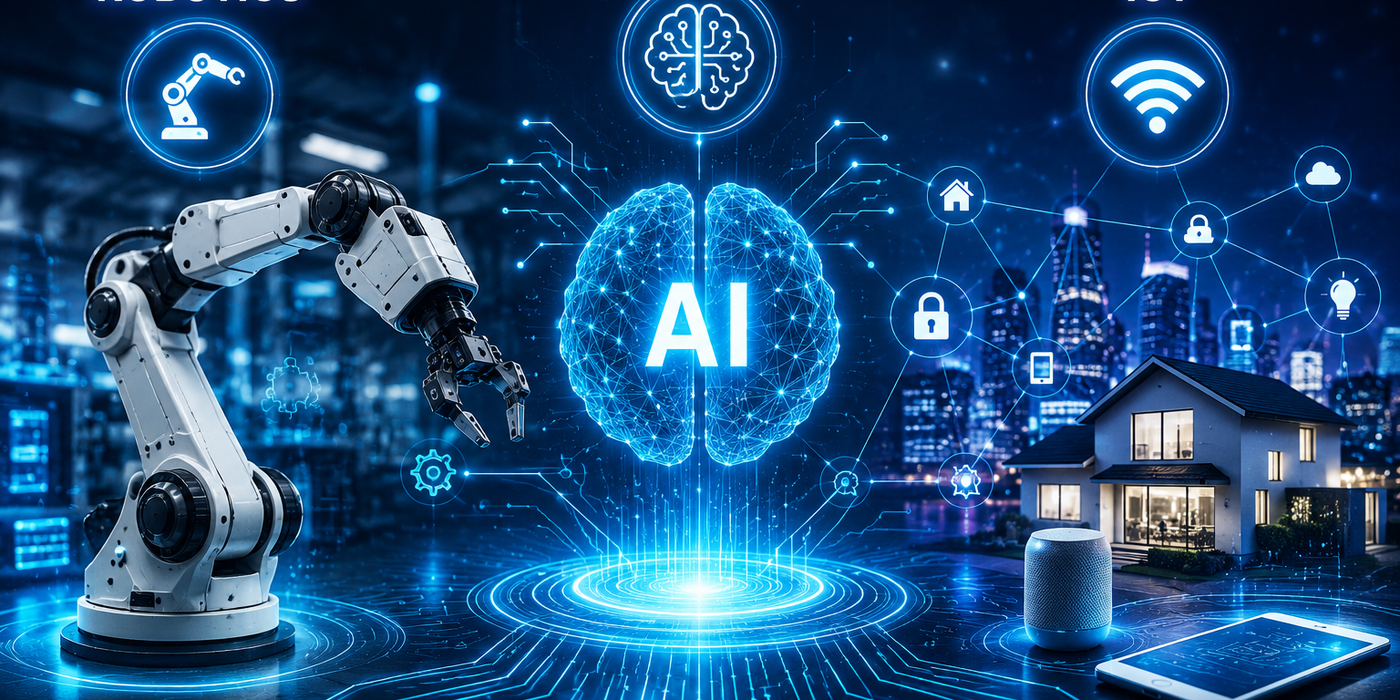
Education is undergoing a major transformation as robotics, artificial intelligence (AI), and the Internet of Things (IoT) continue to reshape how learners interact with technology and develop future-ready skills. Across the world, schools are moving beyond traditional classroom models toward smart, innovation-driven learning environments that encourage creativity, critical thinking, collaboration, and hands-on problem-solving.
Robotics education is helping learners build practical engineering, coding, and automation skills while exposing them to real-world problem-solving experiences through project-based learning. From designing smart systems to programming robots, students are becoming active creators of technology instead of passive consumers.
Artificial intelligence is also transforming modern classrooms by enabling personalized learning experiences, adaptive educational systems, data-driven instruction, and intelligent digital tools that support both educators and learners. AI-powered education is helping schools create more engaging, interactive, and accessible learning experiences that prepare students for the digital economy and Industry 4.0 workforce demands.
The integration of IoT technologies into STEM education is further bridging the gap between classroom learning and real-world application. Smart sensors, connected devices, and automated systems allow learners to collect real-time data, monitor environments, build intelligent solutions, and understand how emerging technologies are shaping industries globally.
As the demand for digital skills, innovation, and technology literacy continues to grow globally, STEM education is becoming increasingly important in preparing young people for future careers in robotics, engineering, cybersecurity, AI, software development, automation, and emerging technologies.
The future classroom is no longer limited to textbooks and theory-based learning. Instead, it is becoming a collaborative innovation hub where learners develop practical technology skills, build creative solutions, and gain exposure to future-focused industries that will shape tomorrow’s world.
The Future of STEM Education: How Robotics, AI & IoT Are Shaping Tomorrow’s Classrooms